The image is striking, not because of movement or action, but because of its stillness. A woman faces the viewer directly, her gaze calm and composed, almost timeless. Her expression does not show fear, pain, or farewell. Instead, it carries a quiet confidence, the kind often seen in portraits meant to preserve beauty rather than capture a moment of change. Her hair is carefully styled, her makeup refined, and her jewelry elegant. Everything about her appearance suggests intention, control, and presence. And yet, beneath this composed portrait lies a jarring contradiction: bold text declaring death.
The words at the bottom—short, direct, and absolute—transform the image instantly. Without them, this could be a promotional photograph, a magazine cover, or a memory frozen at the height of someone’s life. With them, the image becomes something else entirely: a confrontation with mortality. The contrast between vitality and finality is what gives the image its emotional weight. She looks alive, vivid, and confident, yet the message tells us she is gone. This tension forces the viewer to pause.
What makes the image especially powerful is how familiar it feels. We live in an age where faces become icons, and icons become headlines. A single photograph can be circulated endlessly, stripped of context, shared faster than truth can follow. In that sense, the image is not just about one person—it is about how modern audiences experience loss. Often, we do not encounter death through personal moments or quiet goodbyes, but through screens, captions, and bold typography.
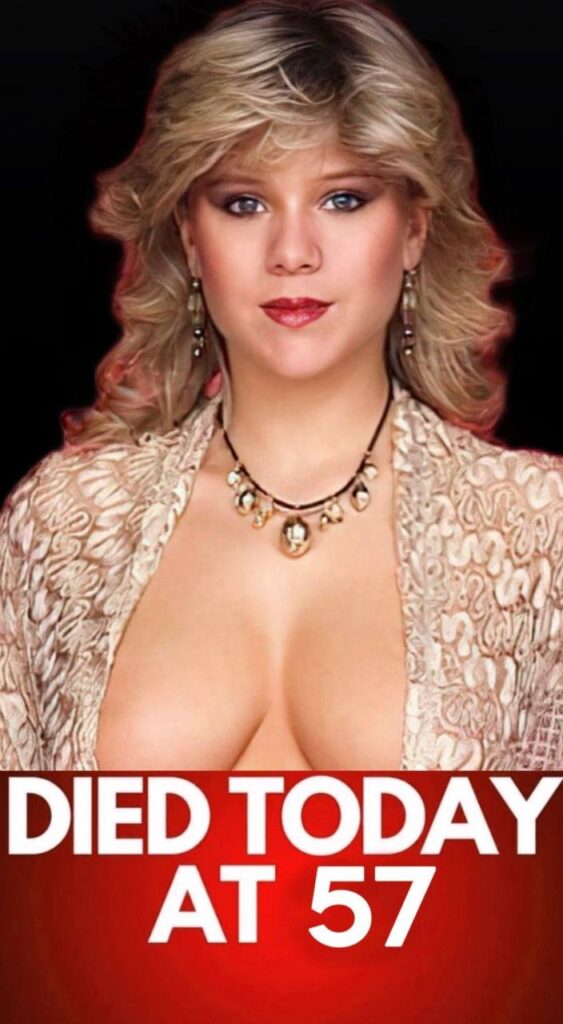
The woman’s age, stated plainly, adds another layer. Fifty-seven is neither young nor old in the emotional imagination. It exists in a space where life still feels active, relevant, unfinished. Seeing that number attached to the word “died” creates a subtle discomfort. It suggests uncompleted stories, interrupted plans, and years that could have been. The image quietly asks a question without words: when is a life considered complete?
There is also something deliberate about the glamour in the photograph. Beauty, when paired with death, has always unsettled people. We are conditioned to associate death with decline, fragility, or darkness, yet here it stands beside elegance and light. The image resists decay. It preserves the subject in a version of herself that feels permanent, untouched by time. In doing so, it mirrors how memory often works. We remember people not as they were at the end, but as they were when they felt most themselves.
The direct gaze is important. She looks outward, not away. There is no sense of retreat or disappearance. Instead, her eyes meet the viewer, as if refusing to fade quietly. This gaze can feel accusatory, intimate, or even comforting, depending on who is looking. It invites connection while denying explanation. We are given no story, no cause, no history—only a face and a statement. The absence of detail forces the viewer to fill in the gaps with their own emotions.
In many ways, the image reflects how modern grief has become compressed. A life reduced to a headline. A presence reduced to a photograph. The complexity of a human being flattened into a single sentence designed to capture attention. This is not necessarily cruel, but it is incomplete. And perhaps that incompleteness is the point. The image does not tell us who she was; it reminds us that every person was more than what can fit on a screen.
There is also an undercurrent of discomfort in how easily such images are consumed. We scroll past announcements of death alongside advertisements, jokes, and celebrations. The image challenges that habit by demanding stillness. The stark wording leaves little room for detachment. Even if the viewer feels no personal connection, the finality of the message presses in. It reminds us that time is not abstract—it is counted, measured, and eventually stopped.
Ultimately, the image is not just about death. It is about visibility. It asks what it means to be seen, remembered, and reduced. It highlights the fragile line between presence and absence, between being admired and being mourned. The woman in the image does not speak, yet her silence is loud. It echoes with all the stories not told, all the emotions not captured, all the lives that continue after the headline fades.
In that way, the image becomes a mirror. It reflects not only a life concluded, but the viewer’s own relationship with time, memory, and meaning. It leaves us with a quiet awareness: every face carries a story, and every story ends—but how it is remembered depends on more than a single image.